Living in Easton & Greenbank, Bristol
Creative, diverse community with strong grassroots activities and cultural identity
Easton & Greenbank Quick Facts
Key information at a glance
Award-Winning Location
Declared one of TimeOut's 'top 50 coolest neighbourhoods' in 2019
Multicultural, buzzing inner-city neighbourhood known for its food scene and strong community
Join Local Community Groups
Easton Community
Connect with local residents, share information, and stay updated on community events
Join GroupWhat's the vibe?
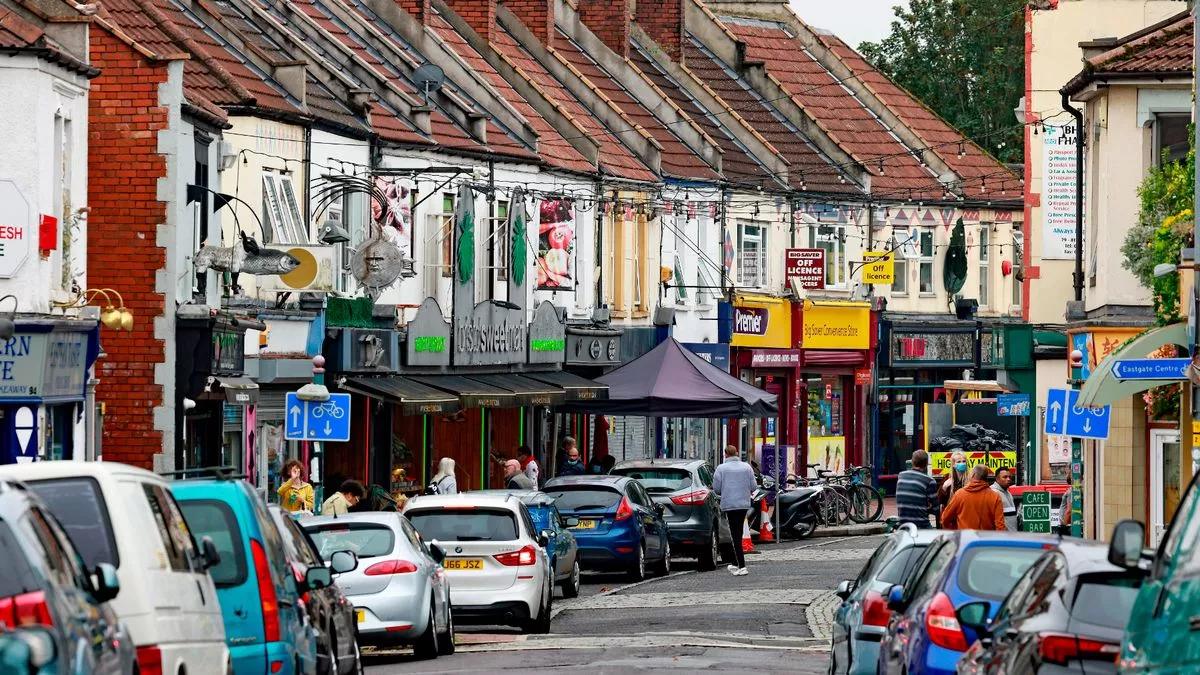
Easton is one of Bristol's most vibrant and culturally diverse inner-city neighbourhoods, known for its strong sense of community, independent spirit and standout food scene. Streets such as Stapleton Road and St Mark's Road reflect the area's multicultural character, with a wide mix of international grocers, cafés, restaurants and independent businesses that give Easton a distinctive energy and identity.
The neighbourhood is largely defined by Victorian and Edwardian terraced housing, much of it arranged along busy residential streets and quieter pockets of traditional housing. In recent years, new developments, renovations and an influx of younger professionals and families have added to the housing mix, contributing to rising property values and a noticeable process of gentrification. This has brought new cafés, creative businesses and investment into the area, but has also raised concerns around affordability and the displacement of long-standing residents.
Community life remains central to Easton's appeal. Local organisations, community projects, green spaces and neighbourhood events help foster a strong sense of belonging, while the area's proximity to central Bristol makes it attractive to people who value urban living and good access to the city.
Easton has earned a reputation as one of Bristol's most community-minded neighbourhoods, with some even claiming it hosts more street parties than anywhere else in the city. From informal summer gatherings to landmark events such as the St Mark's Road Grand Iftar, the area has a long tradition of bringing neighbours together in shared outdoor spaces. On warm evenings, music often drifts onto the pavements, neighbours gather outside local shops, and streets can briefly take on the feel of lively community meeting places.
Easton does, however, have some of the social challenges associated with a densely populated inner-city area. Parts of the neighbourhood experience higher levels of deprivation, and perceptions around crime and antisocial behaviour can vary considerably from street to street. As a result, the character and feel of Easton can change quickly between different pockets of the area.
Overall, Easton offers a lively, characterful alternative to Bristol's more polished neighbourhoods. Its appeal lies in its cultural diversity, community atmosphere, independent food and retail scene, and distinctive period housing, while its ongoing regeneration and gentrification continue to reshape the area.
Population
~13,500 residents - high BAME representation (~30%), many in elementary and service roles, unemployment moderately above city average
Walkability Score
Easton Scrapbook
A visual journey through Easton's multicultural community, vibrant street art, diverse food scene, and grassroots creative spaces
Swipe or tap a photo to enlarge
Transport & Commute
Bus Routes
City Centre
Close to M32, frequent buses on Stapleton/Easton/St Marks Road
Nearest station: Stapleton Road and Lawrence Hill - connecting to Temple Meads, South Wales, Severn Beach Line
Distance to Bristol's Main Employer Hubs
Approximate distances from Easton & Greenbank to the city's largest employment centres.
- Central Bristol~2.0 mi
- Southmead Hospital~4.0 mi
- Filton / Abbey Wood~4.0 mi
- UWE Frenchay~3.5 mi
- Aztec West~7.0 mi
- Filton Aerospace~5.0 mi
Local Amenities
Shopping & Dining
- • Stapleton Road multicultural grocers
- • St Marks Road ethnic food shops
- • Easton Market and weekly food stalls
- • Halal butchers and international restaurants
- • International restaurants reflecting multicultural community
- • Ethnic food shops and bakeries
- • Local cafés and traditional pubs
- • Weekly market food stalls
Healthcare & Services
- • Several GP practices
- • Local pharmacies and clinics
- • Community centres
- • Moderately self-contained services
Who Lives Here?
Families
40% - Many young, diverse families opting for affordable space and cultural richness
Professionals
30% - Creatives attracted to neighbourhood ethos and central location
Students
20% - Renters in shared or smaller units
Retirees
10% - Fewer older residents, but some long-standing locals remain
Key Investment Factors
Increasing demand from buyers seeking affordability near central Bristol. Strong cultural identity and community-driven businesses stabilizing values.
Inner-city location with excellent transport links including two train stations. Close to M32 and dual carriageways providing good connectivity.
Good transport links including stations and proximity to city centre. Multiple bus routes and cycling access to central locations.
Neighbourhood in flux with recent property value surges. Continued regeneration and creative community demand supporting growth.
Local primary schools increasingly rated Good, though no Outstanding secondary locally. Infrastructure still playing catch-up despite improvements.
Honest Pros & Cons
Pros
- Rich multicultural atmosphere with diverse shops, food, festivals and community cohesion
- Affordable housing compared to inner-city neighbours, yet central and walkable
- Emerging arts and grassroots culture support liveliness and identity
- Good transport links including two stations and proximity to city centre
- Strong sense of community with established local networks
- Excellent access to international cuisine and cultural events
Cons
- High crime perception and occasional violent/antisocial incidents
- Feeling of crowding; housing stock often lacks parking or green space
- Disparities in income and quality of life across micro-areas
- Schools and infrastructure still playing catch-up despite improvements
- Long-standing issues with petty crime around transport hubs
- Some areas feel in need of ongoing regeneration investment
How residents describe Easton & Greenbank
The words that come up most often in real feedback from people who live in Easton & Greenbank, Bristol.
- people4
- avoid3
- want3
- stapleton3
- easton2
- community2
- than2
- anywhere2
- else2
- wouldn2
- bristol1
- cultural1
- melting1
- feast1
Word size reflects how often each word appears in the resident reviews quoted above for Easton & Greenbank. Numbers show the mention count.
What people are saying about Easton & Greenbank
Real feedback from residents and recent movers, gathered from local conversations and community groups.
"Easton – Bristol's cultural melting pot… a feast for the senses, with its diverse community and mouth-watering cuisine."
"I love Easton. We've been here 10 years... There's a really strong sense of community... Yes, there's crime but I don't feel any less safe here than anywhere else."
"It does seem to vary wildly — your neighbour could be bougie ex‑Londoners who own a £500k terrace, or actual crack dens. I would avoid the St Jude's end and wouldn't want to live near Stapleton Rd."
"As a 28‑year‑old woman, I walk home along Stapleton Rd from town — there are often people clearly under the influence, and I'm more street‑smart here than I've felt anywhere else."
"Being off Stapleton Road there isn't particularly nice. Lots of people with obvious addiction and mental health issues… I wouldn't say it's walkable at night. The M32 underpasses are very sketchy."
"There are parts that people avoid and that's fair — the drug addicts and dealers are people you want to avoid... if someone asked you for something you didn't want, are you able to shut that conversation down?"
Notable Residents
Banksy
The renowned street artist lived in Easton in the 1990s—several early artworks remain locally, though some have been removed during repainting efforts.
Marvin Rees
Elected Mayor of Bristol in 2016, grew up in Easton—bringing political visibility to the area and contributing to local regeneration narratives.
Property Overview
Schools & Education
Primary Schools
Secondary Schools
Parks & Green Spaces
Our Favourite Roads in Easton & Greenbank
Easton & Greenbank is full of charming streets with real character—whether you're drawn to period homes, green views, or that wow-factor design. Here are a few of our favourite roads in the area:
🌿 Carlyle Road
Carlyle Road is a quiet terraced street offering a particularly tranquil spot within this vibrant residential area of the city, placed between Greenbank Cemetery and the Bristol Bath Cycle Path. The area has moderate household income of £42,300 (ranking 5/10 nationally), with property values averaging £294,855. While facing some urban challenges typical of inner-city areas, it offers affordable housing with 60% of areas in England and Wales having higher income levels.
🍽️ St Marks Road
Food lover's paradise with bakeries, international eateries, and specialty shops reflecting the area's rich cultural diversity. Home to weekly market stalls and community gathering spaces. The area has household income of £42,300 (ranking 5/10 nationally) and property values averaging £298,861, making it an accessible multicultural hub with strong community character and very high crime perception typical of busy urban food quarters.
🎨 Robertson Road
Creative hub housing BASE social centre and community workshop spaces. Tree-lined residential street popular with artists and activists seeking affordable housing with character. The area shows strong entrepreneurial spirit with household income of £42,300 (ranking 5/10 nationally) and property values averaging £345,689. Notable for very high levels of self-employment (16% vs UK average 9.7%), reflecting its creative community character.
🚂 Easton Road
Well-connected residential street offering excellent transport links with mix of Victorian terraces. Popular with commuters and families seeking good value housing near stations. The area has household income of £39,900 (ranking 4/10 nationally) with property values averaging £286,435. Reflects multicultural demographics with only 56.8% UK-born residents, showing high deprivation scores but strong community diversity and transport connectivity.
Easton & Greenbank FAQs
Is Easton & Greenbank a good place to live in Bristol?
Easton is one of Bristol's most vibrant and culturally diverse inner-city neighbourhoods, known for its strong sense of community, independent spirit and standout food scene. Streets such as Stapleton Road and St Mark's Road reflect the area's multicultural character, with a wide mix of international grocers, cafés, restaurants and independent businesses that give Easton a distinctive energy and identity. The neighbourhood is largely defined by Victorian and Edwardian terraced housing, much of it arranged along busy residential streets and quieter pockets of traditional housing. In recent years, new developments, renovations and an influx of younger professionals and families have added to the housing mix, contributing to rising property values and a noticeable process of gentrification. This has brought new cafés, creative businesses and investment into the area, but has also raised concerns around affordability and the displacement of long-standing residents. Community life remains central to Easton's appeal. Local organisations, community projects, green spaces and neighbourhood events help foster a strong sense of belonging, while the area's proximity to central Bristol makes it attractive to people who value urban living and good access to the city. Easton has earned a reputation as one of Bristol's most community-minded neighbourhoods, with some even claiming it hosts more street parties than anywhere else in the city. From informal summer gatherings to landmark events such as the St Mark's Road Grand Iftar, the area has a long tradition of bringing neighbours together in shared outdoor spaces. On warm evenings, music often drifts onto the pavements, neighbours gather outside local shops, and streets can briefly take on the feel of lively community meeting places. Easton does, however, have some of the social challenges associated with a densely populated inner-city area. Parts of the neighbourhood experience higher levels of deprivation, and perceptions around crime and antisocial behaviour can vary considerably from street to street. As a result, the character and feel of Easton can change quickly between different pockets of the area. Overall, Easton offers a lively, characterful alternative to Bristol's more polished neighbourhoods. Its appeal lies in its cultural diversity, community atmosphere, independent food and retail scene, and distinctive period housing, while its ongoing regeneration and gentrification continue to reshape the area. Creative, diverse community with strong grassroots activities and cultural identity
How much do houses cost in Easton & Greenbank?
The average sold price in Easton & Greenbank is around £310,000, with the wider range roughly £250k - £720k. Average rent is about £1,100/month. Typical housing stock includes victorian terraces, early flats, post-war estates, heritage properties.
What are the schools like in Easton & Greenbank?
Primary options include Easton C of E Academy (0.3 miles), St Barnabas C of E Primary (0.5 miles). Secondary options include John Cabot Academy (1.8 miles).
How do you get into Bristol city centre from Easton & Greenbank?
Close to M32, frequent buses on Stapleton/Easton/St Marks Road. Bus routes serving the area: 5, 18, 42, 43, 44, 45. Nearest station: Stapleton Road and Lawrence Hill - connecting to Temple Meads, South Wales, Severn Beach Line. Cycling: Local cycle network, City centre connections.
What are the pros and cons of living in Easton & Greenbank?
Pros: Rich multicultural atmosphere with diverse shops, food, festivals and community cohesion; Affordable housing compared to inner-city neighbours, yet central and walkable; Emerging arts and grassroots culture support liveliness and identity; Good transport links including two stations and proximity to city centre; Strong sense of community with established local networks; Excellent access to international cuisine and cultural events. Cons: High crime perception and occasional violent/antisocial incidents; Feeling of crowding; housing stock often lacks parking or green space; Disparities in income and quality of life across micro-areas; Schools and infrastructure still playing catch-up despite improvements; Long-standing issues with petty crime around transport hubs; Some areas feel in need of ongoing regeneration investment.
Is Easton & Greenbank walkable?
Easton & Greenbank scores 70/100 for walkability in our assessment. Green space within walking distance includes Troopers Hill Nature Reserve, Eastville Park nearby, Local playgrounds and community spaces. Everyday shopping: Stapleton Road multicultural grocers, St Marks Road ethnic food shops, Easton Market and weekly food stalls.
If you like Easton & Greenbank, you might also like these areas
Other multicultural areas in and around Bristol
Victorian terraces around St George Park with genuinely good value.
Affordable east Bristol suburb with big parks and a busy high street.
Bristol's street-art heartland and its most opinionated high street.
Bohemian streets, period houses and a five-minute walk to Gloucester Road.
Other first-time buyer areas in and around Bristol
Victorian terraces around St George Park with genuinely good value.
Affordable east Bristol suburb with big parks and a busy high street.
South Bristol energy: murals, micropubs and an independent high street.
Affordable south Bristol family housing with parks and long city views.
Other creative areas in and around Bristol
North Street independents, the Tobacco Factory and a short walk to the harbour.
Victorian terraces around St George Park with genuinely good value.
Bristol's street-art heartland and its most opinionated high street.
South Bristol energy: murals, micropubs and an independent high street.
Painted hillside terraces with a tight-knit, arty community.
Bohemian streets, period houses and a five-minute walk to Gloucester Road.
Comments on Easton & Greenbank
Lived here, moved away, or thinking about it? Share what the area is really like — your comment appears straight away and you can reply to anyone else's comment too.
No comments yet — be the first to share your experience of Easton & Greenbank.